
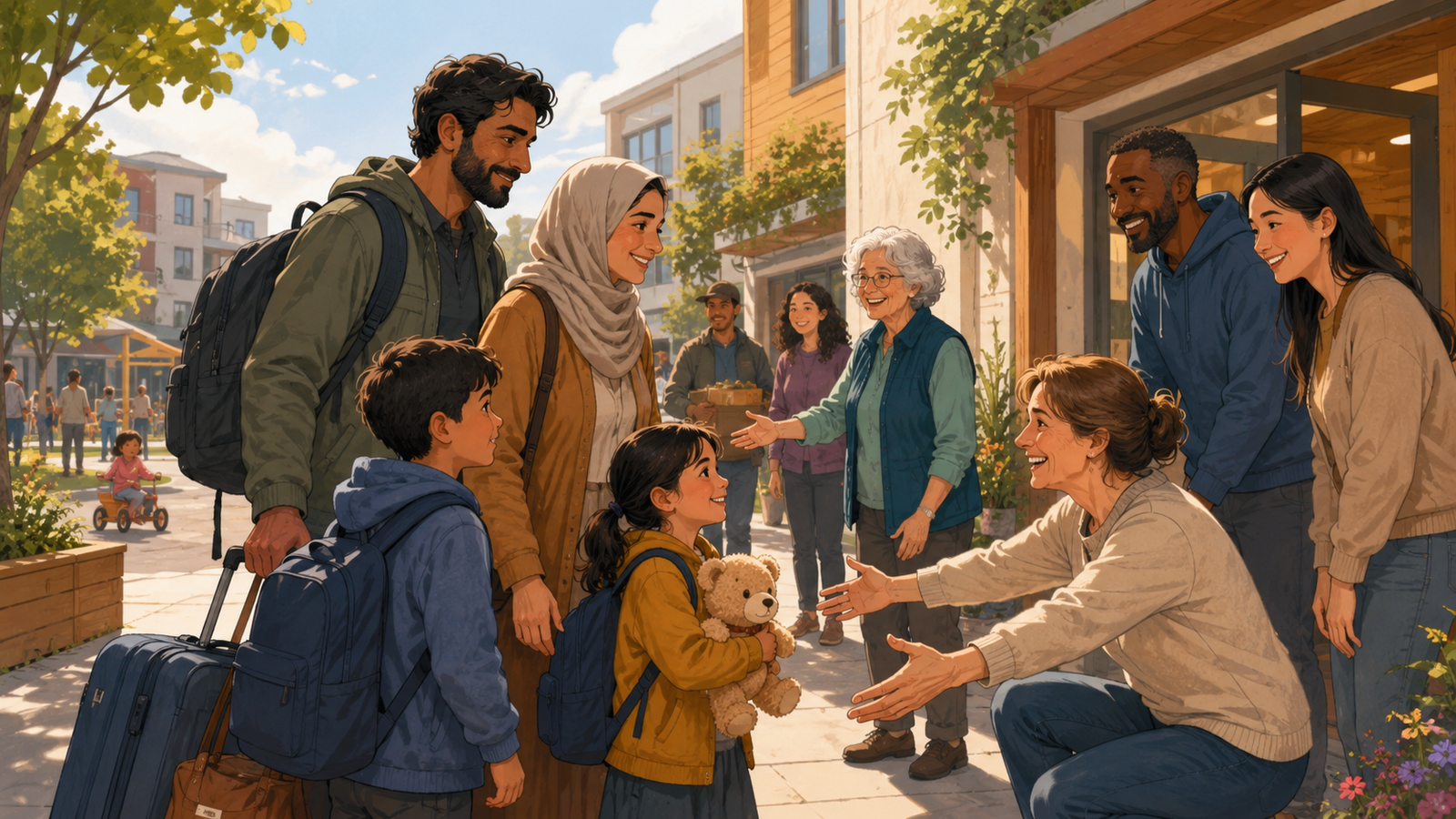
There is a future in which the first face a refugee meets at a border is not suspicion, but protection.
In that future, a family fleeing war, persecution, disaster or hunger is not treated as an invasion because they survived what no family should have had to endure. A child carrying a small bag across a checkpoint is not reduced to a political argument. A mother who left everything behind is not forced to wait in danger while governments debate whether her suffering is convenient.
For generations, refugees were spoken of as numbers before they were recognized as people.
A surge.
A crisis.
A burden.
A border problem.
But no human being begins life wanting to become a refugee. People flee because staying becomes more dangerous than leaving. They leave homes, graves, schools, tools, photographs, languages, neighbors, pets and familiar streets. They leave not because they love uncertainty, but because survival forces movement.
A better world would begin there.
Not with fear.
With truth.
Refugee policy built around dignity would still require order, security, processing and planning. But it would refuse cruelty as a management strategy. It would understand that the purpose of asylum is not to reward migration, but to protect human beings from danger.
Safety First, Paperwork Second
The first obligation is immediate safety.
People fleeing credible danger need shelter, food, medical care, legal information, translation, protection from trafficking and a fair chance to present their claims. Borders should not become zones where rights disappear because a person arrived with nothing.
Governments could create humane reception centers staffed by trained asylum officers, medical workers, social workers, interpreters and child-protection specialists. Families should not be needlessly separated. Children should not be held in punitive settings. Survivors of torture, sexual violence, trafficking or war trauma should be identified early and connected to care.
Security screening can occur without humiliation.
Identity verification can occur without abuse.
Order does not require indifference.
A society capable of processing cargo, finance, travel and commerce across borders can also build systems that process human need with competence and compassion.
Integration From the First Day
A refugee should not be forced into years of waiting without work, language access, schooling or community connection.
A humane system would begin integration immediately.
Children should enter school quickly. Adults should receive work authorization, language classes, credential recognition, transportation support and pathways into local employment. Families should be placed where housing, jobs, services and community support are realistically available.
Local governments should receive funding before they are overwhelmed. Communities welcoming refugees should not be expected to carry costs alone. Schools, clinics, housing programs and workforce agencies need resources tied to arrivals.
Integration works best when the public sees preparation instead of chaos.
When refugees are allowed to work, learn and participate, they become neighbors faster. They start businesses, fill labor shortages, pay taxes, join schools, rent homes, buy goods and rebuild lives that war or persecution interrupted.
A refugee policy that forces people into dependency and then complains they need help has designed the very problem it condemns.
Communities Prepared to Welcome
Welcoming refugees is not only a national policy. It is local life.
Cities, towns, faith groups, nonprofits, employers, schools and families all become part of whether a person feels safe enough to begin again.
Governments could fund community sponsorship programs that allow organized groups to help families find housing, navigate services, learn local systems and build relationships. Employers could create apprenticeship and hiring pathways for newcomers. Schools could support language learners while helping classmates understand the stories of the children joining them.
Housing must be planned carefully so vulnerable local residents are not placed in competition with refugees for scarce resources. The answer is not exclusion. It is investment.
A society should not pit one struggling family against another.
It should build enough shelter, opportunity and support that compassion does not become a zero-sum contest.
Addressing the Causes of Flight
Refugee policy cannot end at resettlement.
The world must also address the forces that make people flee: war, persecution, state collapse, famine, climate disaster, gang violence, occupation, economic exploitation and political repression.
Wealthier nations have responsibilities beyond their borders, especially when their policies, weapons, emissions, trade practices or interventions have contributed to instability elsewhere.
Humanitarian aid, climate adaptation, conflict prevention, fair development, anti-corruption work, support for democratic institutions and responsible arms controls can reduce forced displacement before families reach the point of flight.
No border wall can solve what despair, violence and climate collapse continue to create.
The most effective refugee policy is one that helps fewer people become refugees in the first place.
The Gift Refugees Bring
Refugees do not arrive only with need.
They arrive with memory, skill, language, faith, recipes, music, professional experience, resilience and love for children whose future they refused to surrender. Many become doctors, drivers, teachers, builders, caregivers, business owners, artists, students and citizens. Many carry gratitude not because exile was easy, but because safety gave them room to live again.
A country that welcomes refugees does not lose itself.
It tests whether its values are real.
If freedom matters, it must matter when the person seeking it was born elsewhere.
If family matters, it must matter when the family at the border speaks another language.
If human dignity matters, it must matter before paperwork is complete.
The Door That Opened
There is a future in which refugee policy is organized, secure and humane.
There is a future in which families are not punished for surviving, children are not detained for needing safety and communities are given the resources to welcome well.
There is a future in which countries understand that borders define territory, but they do not erase moral responsibility.
A home beyond the border is not merely a place to sleep.
It is the first evidence that the world has not entirely surrendered to cruelty.
When a nation opens that door with wisdom and dignity, it does more than save the person entering.
It saves something in itself.
Reader Discussion
Add your perspective
Comments are open to Reader Briefing subscribers. Enter your subscriber email, request a 6-digit code, then post your comment.