
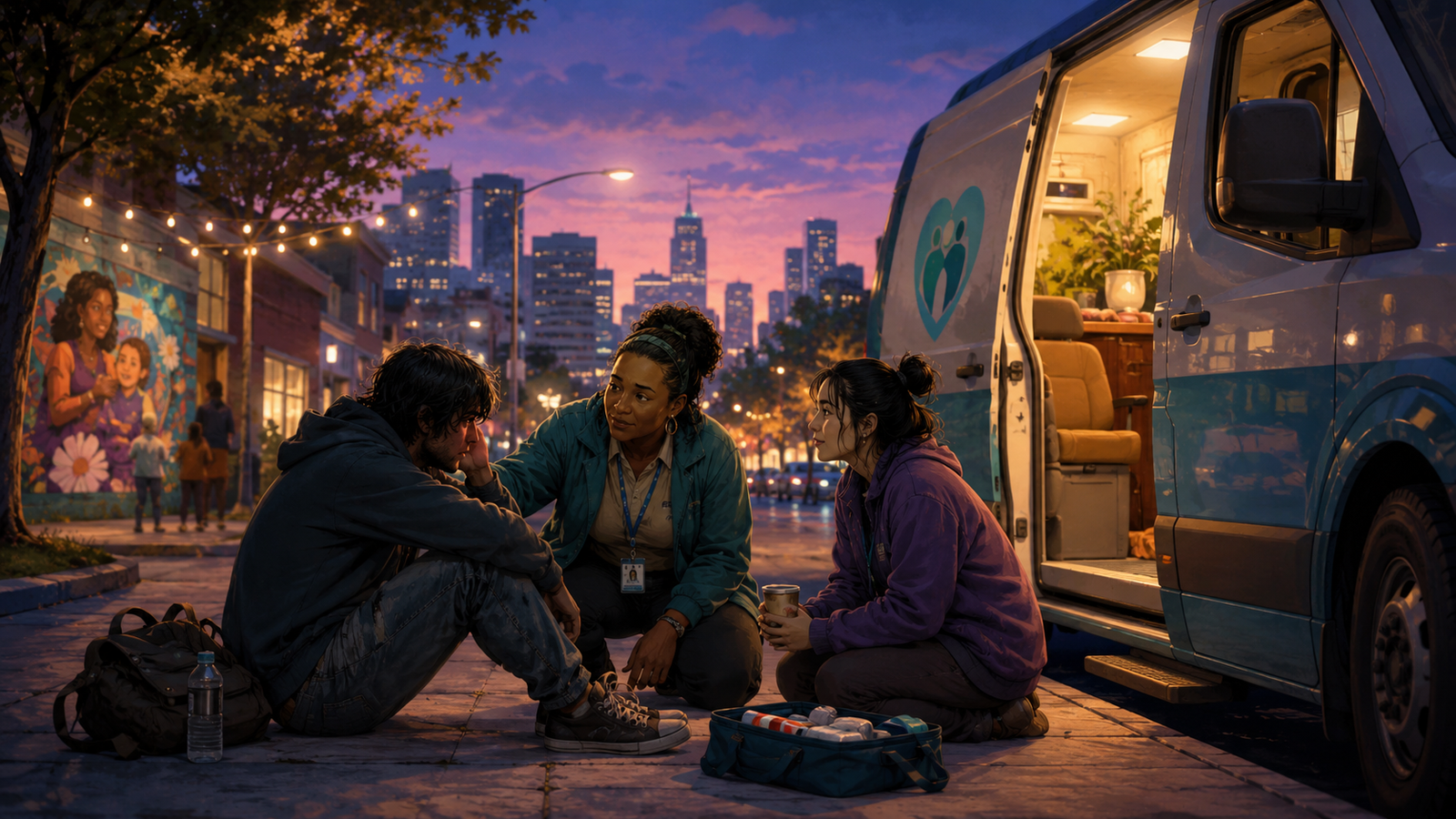
There is a future in which the first serious conversation about a person’s health does not begin beneath the fluorescent lights of an emergency room.
In that future, a father does not discover his blood pressure is dangerously high only after collapsing at work. A woman does not learn that a treatable cancer has advanced because screening was too expensive or too far away. A child does not struggle for years with anxiety, asthma, poor vision or hunger before an adult finally connects the symptoms to the support that was missing.
For generations, the United States became remarkably skilled at intervening after illness had become unbearable. Hospitals could perform extraordinary procedures. Emergency departments could stabilize people at the edge of catastrophe. Medical technology could extend lives in ways earlier generations could barely imagine.
Yet millions still lived without the ordinary care that might have prevented crisis from arriving at all.
A medical system built mainly around emergencies is not simply expensive. It is a system that asks people to become sick enough, frightened enough or close enough to disaster before help becomes unavoidable.
A wiser nation would choose another measure of success.
Not how many crises medicine can rescue at the last possible moment, but how many people never have to reach that moment in the first place.
The Clinic Close Enough to Reach
Preventive care means little when it exists only in theory.
A person cannot attend regular appointments at a clinic two hours away without transportation. A parent cannot schedule checkups easily when missing a shift means losing wages needed for groceries. A rural community cannot rely on preventive medicine after its nearest healthcare facility closes. A neighborhood cannot maintain health when its residents face long waits for primary care but immediate access to pollution, stress and unsafe conditions.
A country serious about prevention would build care where people live.
Community health centers could be expanded in rural towns, low-income neighborhoods, tribal communities and areas left behind by hospital consolidation. Mobile clinics could bring screenings, vaccinations, dental care and chronic-disease monitoring to communities where travel remains a barrier. Telehealth could support care without replacing the need for in-person services when people need examination, treatment or human connection.
Employers could provide paid time for medical visits rather than forcing workers to choose between health and income. Schools could connect children to vision screenings, mental-health support, dental services and nutrition programs before small problems become lifelong obstacles.
Healthcare should not be a distant institution people enter only after their lives have been interrupted.
It should be a steady presence close enough to help people remain well.
The Illness Found Early
Many of the conditions that harm families most deeply become more dangerous when they are found late.
Cancer screenings, prenatal visits, blood pressure checks, diabetes monitoring, vaccines, dental care, addiction treatment and mental-health support are not luxuries reserved for people with generous insurance and flexible jobs. They are among the most practical forms of public protection a society can provide.
A transformed system would ensure that preventive services are simple to obtain, clearly explained and affordable to everyone. Patients would not postpone a mammogram, colonoscopy, prenatal appointment or mental-health visit because the cost remained uncertain. People managing chronic illness would receive medicines, monitoring supplies and nutritional guidance before a preventable emergency sent them to a hospital.
Public-health agencies could work with trusted community organizations, faith institutions, local advocates and neighborhood clinics to overcome fear, misinformation and histories of medical mistreatment. Prevention cannot be delivered successfully through access alone. It must also be delivered through trust.
Early detection is more than a medical strategy.
It is time returned to a family.
It is treatment begun before hope narrows.
It is a life changed because care arrived before crisis demanded attention.
Mental Health Treated as Health
A society built around prevention would stop drawing an artificial line between the body and the mind.
Depression, anxiety, trauma, addiction, loneliness and severe mental illness do not become less real because symptoms are not visible in an X-ray. Untreated distress can affect families, work, education, physical health and safety long before a person appears in a hospital, a jail cell or a moment of irreversible despair.
Every community should have access to counseling, crisis support, addiction treatment and psychiatric care without months-long waits or unbearable costs. Schools should have qualified mental-health professionals. Primary-care offices should screen for emotional distress as routinely as they check blood pressure. Employers should protect time for treatment without making people fear losing work or advancement.
Insurance systems and public programs should not place greater barriers in front of mental-health care than physical care. A person should not need to become dangerous, homeless or suicidal before receiving sustained help.
Corporate leaders also have responsibilities. Workplaces built around impossible hours, unstable scheduling, intimidation or constant insecurity cannot sponsor a wellness seminar and claim the harm has been addressed. Companies could reduce burnout through fair staffing, paid leave, humane workloads and benefits that make treatment accessible.
Prevention begins when people are allowed to seek help while their lives can still be steadied.
Health Beyond the Doctor’s Office
A clinic cannot prescribe away every source of illness.
A child breathing contaminated air, a family drinking unsafe water, a senior living in extreme heat without cooling, a worker exposed to dangerous chemicals and a parent trying to feed children in a neighborhood without affordable groceries are living inside conditions medicine alone cannot solve.
Preventive healthcare must therefore extend to housing, food, water, air, transportation, workplace safety and climate resilience.
Governments could replace lead pipes, enforce pollution limits, fund healthy housing repairs, build shaded and cooled public spaces, support access to nutritious food and protect workers from hazards that shorten lives. Hospitals and health insurers could invest in community conditions that reduce preventable illness rather than concentrating resources only after people become patients.
Corporations whose operations pollute communities, expose workers to danger or make lifesaving goods unaffordable should be required to account for the health consequences of their choices.
Health is not produced only by medicine.
It is produced by whether the place a person lives allows the body and mind to survive with dignity.
A Different National Budget
A nation that chooses prevention would also change how it thinks about cost.
Preventive care requires investment. Clinics must be built. Professionals must be trained and paid. Screenings, medicines, counseling and community programs require sustained funding.
But crisis has never been free.
It appears in emergency surgeries that might have been avoided, hospital admissions for conditions that could have been controlled, lost working years, grieving families, children without parents, crowded jails housing people whose untreated illness became public emergency, and communities carrying preventable pain generation after generation.
A budget that refuses early care does not save money.
It delays the bill until it is larger and paid in human suffering.
A government willing to invest before crisis would measure success in lives kept stable: fewer preventable deaths, healthier pregnancies, better-managed chronic disease, fewer mental-health emergencies, children able to see and learn, workers able to remain with their families.
The Day Care Arrived in Time
There is a future in which people no longer wait until their bodies force them to seek help.
There is a future in which a mobile clinic reaches a rural town, a counselor reaches a struggling teenager, a screening finds illness early, a safe apartment reduces a child’s asthma and a worker keeps both a paycheck and a medical appointment.
There is a future in which healthcare is not known primarily as the place people go when everything has already gone wrong.
It is known as the promise that someone will help before it does.
A humane society does not wait for suffering to become dramatic enough to deserve attention.
It notices earlier.
It listens sooner.
It builds care close enough to reach people while healing is still possible and hope has not yet been asked to survive alone.
Reader Discussion
Add your perspective
Comments are open to Reader Briefing subscribers. Enter your subscriber email, request a 6-digit code, then post your comment.