
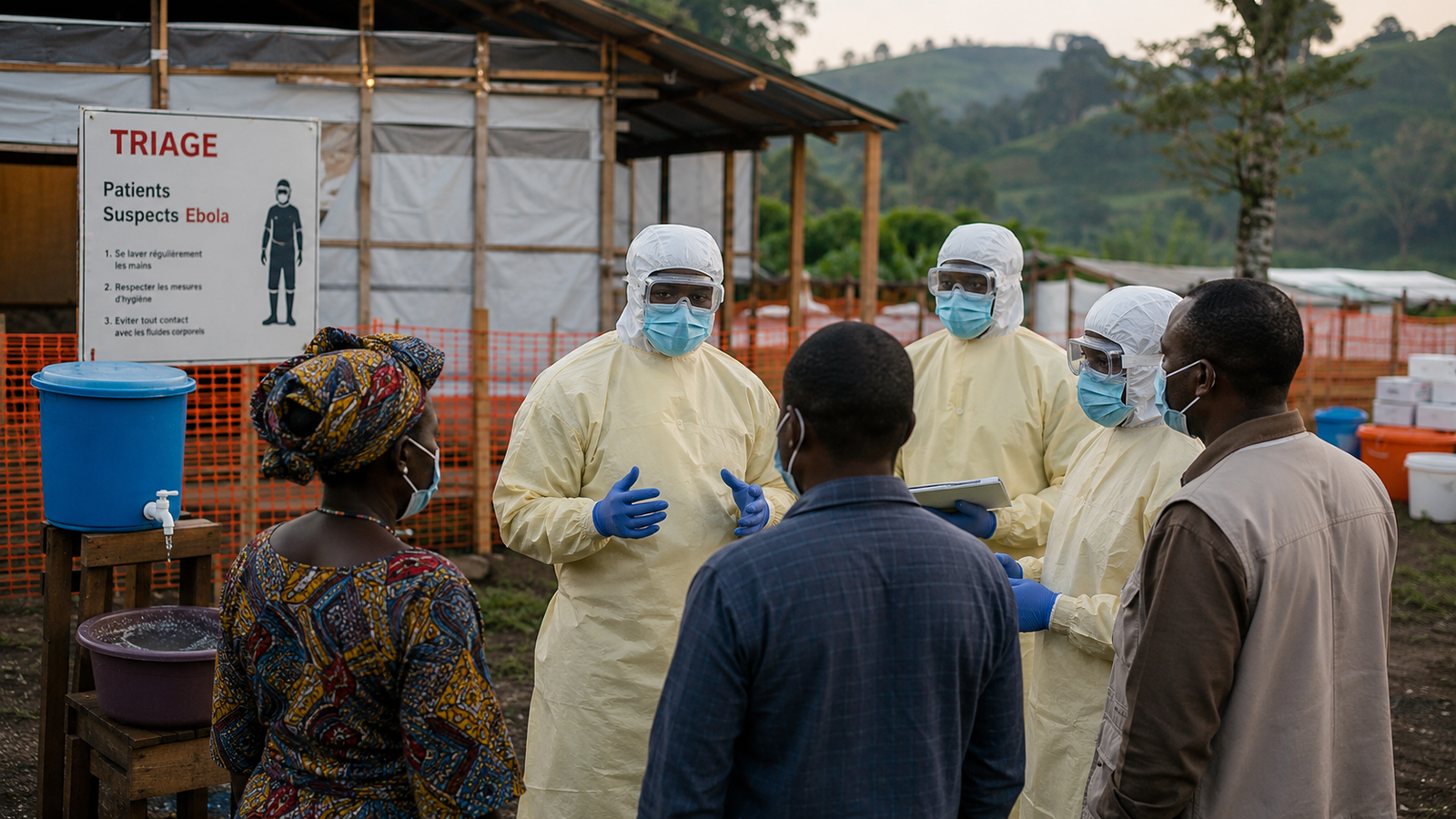
A fast-moving Ebola outbreak in the eastern Democratic Republic of the Congo has become a regional public-health emergency after confirmed cases were also identified in Uganda. The virus involved is Bundibugyo, a rare type of Ebola for which there is currently no approved strain-specific vaccine or treatment.
The medical danger is serious, but the response is being shaped by another urgent challenge: whether families and communities trust the people trying to protect them.
On May 17, the World Health Organization declared the outbreak in the Democratic Republic of the Congo and Uganda a Public Health Emergency of International Concern. WHO stated that the outbreak did not meet the criteria for a pandemic emergency, but warned that international spread had already occurred and that the true extent of transmission remained uncertain.
By May 23, Uganda had confirmed additional cases linked to the outbreak. In eastern Congo, two Ebola treatment centers were reportedly attacked and set on fire within a week, with suspected patients fleeing during the second attack in Mongbwalu.
These developments show why Ebola containment cannot be reduced to laboratory testing and isolation wards alone. A response that does not address fear, funeral traditions, income loss, misinformation and the dignity of affected families can face resistance at the very moment cooperation is most needed.
A Virus Detected After Communities Had Already Suffered
The outbreak was officially declared in the Democratic Republic of the Congo on May 15, after laboratory testing identified Bundibugyo virus in the northeast of the country. Health authorities reported confirmed infections, suspected cases and suspected deaths in Ituri province, including the health zones of Bunia, Rwampara and Mongbwalu.
Health officials also reported deaths among healthcare workers and signs of possible transmission within medical settings. These findings raised concern that the disease may have been circulating before it was formally recognized and that patients, families and frontline workers had been exposed without sufficient protection.
Residents had already begun noticing an unusual number of deaths. In Bunia, one resident described families burying multiple people in a single day. His account captured a community experiencing loss before many people fully understood what was causing it.
Médecins Sans Frontières reported that many people may have died before the outbreak was officially declared. The organization also identified limited diagnostic capacity as a major obstacle because Bundibugyo-specific testing supplies are insufficient. When diagnosis is delayed, isolation and contact tracing are delayed as well.
What Residents Are Worried About
Local reporting indicates that residents are afraid of infection, but they are also worried about how the response affects daily life.
In affected communities, funeral practices are deeply meaningful. Families may expect to wash, touch, gather around or bury a loved one according to tradition. Ebola makes contact with the body of a person who has died especially dangerous because infection can spread through bodily fluids. Public-health teams therefore need strict burial precautions.
But when burial controls are imposed without adequate explanation or family participation, grief can turn into anger. In Rwampara, residents reportedly burned an Ebola treatment center during a dispute after authorities refused to release the body of a suspected victim. Days later, another treatment center was burned in Mongbwalu amid continuing tensions over funeral practices.
The attacks do not mean that communities are unconcerned about Ebola. They show that people may resist a response they experience as frightening, distant or disrespectful. Losing access to a loved one’s body, seeing unfamiliar protective equipment or hearing changing reports about deaths can deepen suspicion, especially in areas already affected by insecurity and weak public services.
Residents have also expressed economic concerns. In communities where many families depend on daily work, mining, informal trade or local markets, restrictions on movement and gatherings can threaten the income needed for food and basic survival. Public-health rules that do not account for these pressures may be harder for families to follow.
Uganda faces a related but distinct concern. Although its cases have been linked to the outbreak centered in Congo, some Ugandans have expressed frustration that the disease is known as Bundibugyo virus, after a Ugandan district associated with an earlier outbreak. Residents and officials worry that the name may stigmatize a district known for agriculture and tourism even when it is not the center of current transmission.
What Health Authorities and Communities Agree On
Despite these tensions, there is common ground.
Families want fewer deaths. Health workers want patients to arrive early enough to receive care safely. Community leaders want clear information rather than rumor. Authorities want to identify infections before they spread into more households, health facilities or neighboring countries.
Public-health agencies and humanitarian organizations identify the same immediate priorities: early detection, contact tracing, protective equipment for healthcare workers, safe and supportive patient care, infection prevention, safe and dignified burials, accurate public information and close work with community leaders.
Local volunteers have been deployed in affected areas to visit households, explain how Ebola spreads, counter misinformation and encourage early treatment. This approach recognizes that people are more likely to follow protective measures when information comes through trusted relationships rather than only through emergency orders.
What Remains Uncertain
The confirmed number of infections may continue to change as more people are tested and transmission chains are investigated. Suspected cases and suspected deaths should not be treated as laboratory-confirmed infections, even though they remain important warning signs during an outbreak.
It is also unclear how far the disease may have spread in areas affected by armed conflict, displacement, difficult roads or informal healthcare networks. People may cross borders for work, family obligations or medical treatment, making coordination between countries essential.
Medical countermeasures remain another uncertainty. Vaccines and antibody treatments approved for the more common Zaire Ebola virus are not approved for Bundibugyo virus. Candidate vaccines or therapies may eventually be studied, but they should not be described as proven tools for this outbreak unless clinical evidence establishes their safety and effectiveness.
Solutions That Protect Health and Preserve Trust
The actions below are based on measures used in previous Ebola responses in countries including Uganda, the Democratic Republic of the Congo and Sierra Leone. While several are established public-health practices, their effectiveness depends on community trust, adequate resources, security conditions and timely implementation.
Make Safe Burials Dignified and Family-Inclusive
Health authorities should work with religious leaders, traditional leaders and families to design burial practices that reduce exposure while allowing relatives to participate safely through viewing arrangements, prayers and culturally respectful ceremonies.
Expected benefit: Reduced infection risk during funerals while lowering anger and resistance.
Tradeoff or risk: Burial procedures may still be painful for families, and rushed implementation can increase mistrust.
Feasibility: High.
First step: Establish local burial liaison teams that include trained health personnel and respected community representatives.
Use Trusted Messengers to Explain Risks and Respond to Rumors
Information should be delivered through local radio, community health workers, religious leaders, women’s groups, youth leaders and survivors of earlier outbreaks where appropriate.
Expected benefit: Earlier care-seeking, improved contact tracing and reduced misinformation.
Tradeoff or risk: Inconsistent messages from different organizations can create confusion.
Feasibility: High.
First step: Release one simple daily public message in local languages explaining symptoms, where to seek care and how families will be treated respectfully.
Protect Healthcare Workers and Expand Testing
Facilities in affected areas need protective equipment, trained staff, safe triage procedures and access to Bundibugyo-capable laboratory testing.
Expected benefit: Fewer infections among healthcare workers and faster identification of transmission chains.
Tradeoff or risk: Supplies and trained personnel may be difficult to reach in insecure or remote areas.
Feasibility: Medium.
First step: Prioritize protective equipment, testing supplies and safe specimen transport for facilities handling suspected cases and border referrals.
Provide Safe Supportive Care Close to Affected Communities
Without an approved strain-specific treatment, patient survival depends heavily on early isolation and high-quality supportive care, including fluid replacement, oxygen support and careful monitoring.
Expected benefit: Better survival chances and greater public confidence in treatment centers.
Tradeoff or risk: Treatment units require trained personnel, equipment and reliable supplies.
Feasibility: Medium.
First step: Expand treatment units near outbreak hotspots while publicly explaining what care patients will receive.
Keep Ordinary Healthcare Services Available
People still need childbirth services, malaria treatment, vaccinations, injury care and treatment for chronic illness during an Ebola emergency.
Expected benefit: Reduced indirect deaths and less fear of health facilities.
Tradeoff or risk: Maintaining separate care pathways requires additional staffing and infection-control resources.
Feasibility: Medium.
First step: Establish clearly separated triage and treatment pathways for suspected Ebola cases and routine patients.
Coordinate Cross-Border Surveillance Without Creating Unnecessary Harm
The Democratic Republic of the Congo, Uganda and neighboring countries should share information rapidly, monitor contacts, improve screening at priority crossings and prepare referral pathways.
Expected benefit: Earlier detection of travel-associated cases and stronger regional containment.
Tradeoff or risk: Excessive restrictions can disrupt trade, family movement and humanitarian operations while pushing travelers toward informal routes.
Feasibility: Medium.
First step: Create shared contact-notification procedures and consistent health guidance at high-risk border areas.
Support Livelihoods While Protective Measures Are in Place
Families asked to isolate, avoid gatherings or change funeral practices may need practical assistance to comply safely.
Expected benefit: Greater cooperation with health measures and reduced economic distress.
Tradeoff or risk: Assistance programs require funding, oversight and fair distribution.
Feasibility: Medium.
First step: Provide targeted food, transport and communication support for affected families, monitored contacts and households facing temporary loss of income.
What to Watch Next
The most important question is whether health authorities and communities can rebuild trust quickly enough to stop transmission. New confirmed cases outside known contact networks, additional infections in neighboring countries, shortages of protective equipment or testing supplies, and further attacks on treatment facilities would all signal growing danger.
Progress would look different: people reporting symptoms earlier, families accepting safe and dignified burial arrangements, protected health workers remaining on duty, contacts completing monitoring and communities receiving reliable information alongside practical support.
Ebola is a medical emergency, but it is also a test of whether a response can protect people without ignoring the realities of grief, poverty, culture and distrust. The outbreak will be contained most effectively not by treating communities as obstacles, but by making them full partners in the work of saving lives.
Reader Discussion
Add your perspective
Comments are open to Reader Briefing subscribers. Enter your subscriber email, request a 6-digit code, then post your comment.