
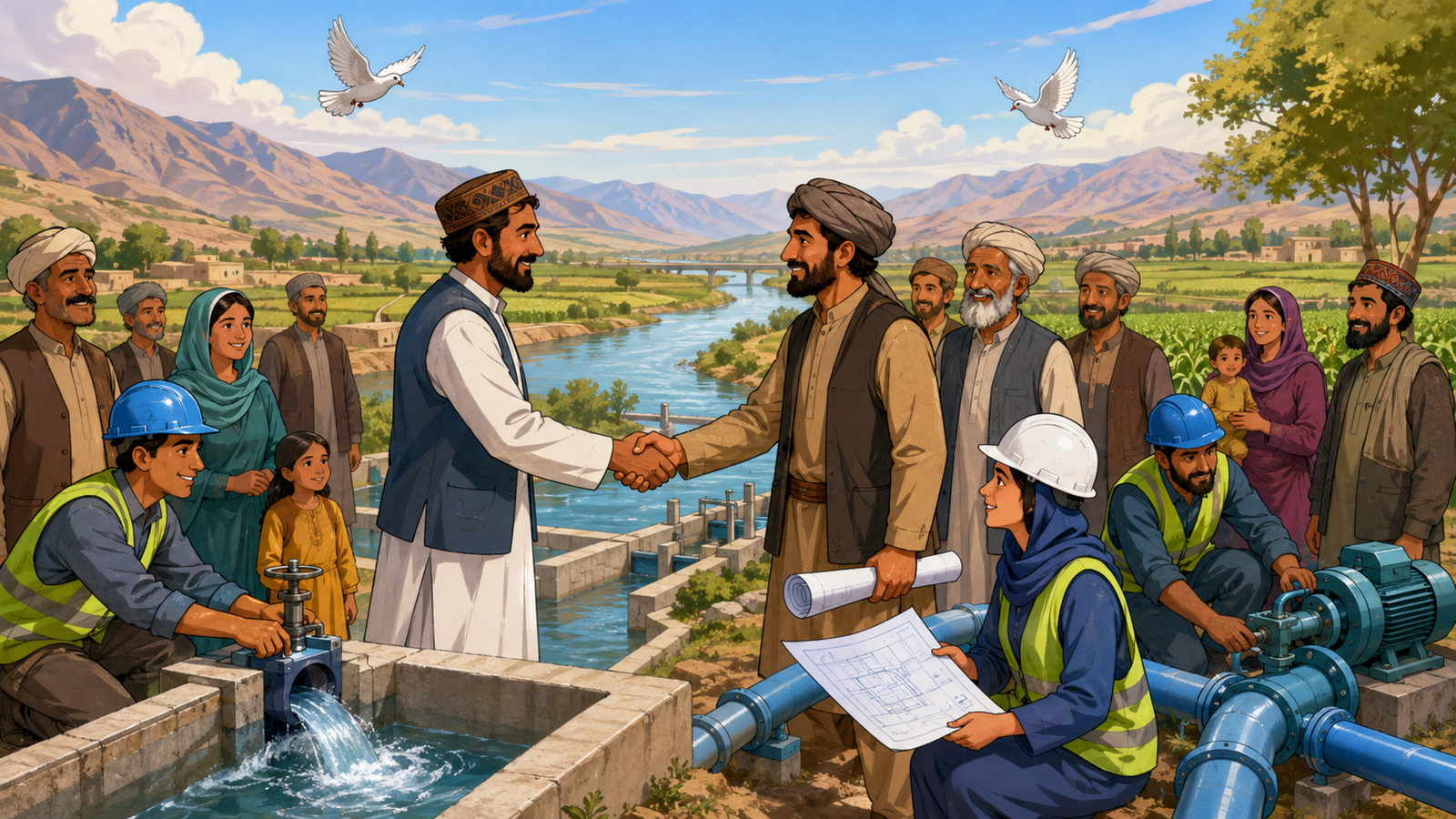
There is a future in which countries facing water scarcity do not reach first for threats, but for agreements.
In that future, a river crossing borders is not treated as a weapon held by the upstream nation or a grievance carried by the downstream one. Aquifers are not drained in secret. Dams are not built without consultation. Farmers, cities, tribes and neighboring countries are not left to compete until scarcity turns into anger.
Water is life, but it is also power.
For generations, rivers shaped civilizations. They fed fields, filled wells, turned turbines, carried trade and sustained cities. But as populations grew, climates shifted and demand increased, shared water became a point of tension in many regions.
A river does not recognize borders.
It flows according to geography, rainfall, snowmelt, soil, heat and human decisions. When one nation diverts, stores, pollutes or overuses water, another may suffer. When drought comes, fear can rise faster than trust.
A better world would understand that water security cannot be built alone.
It must be shared, measured, protected and governed before crisis hardens into conflict.
The River Basin as One Community
The first principle of water peace is that a river basin is a single system.
Countries may draw borders across maps, but the watershed remains connected. What happens upstream affects downstream. What happens to forests affects rainfall. What happens to groundwater affects wells. What happens to pollution affects everyone.
Nations sharing a river could form permanent river-basin councils with real authority, shared data, dispute-resolution systems and participation from local communities, Indigenous peoples, farmers, scientists and water users.
These councils would not erase sovereignty.
They would recognize reality.
No country can secure a shared river by pretending it is the only one that matters.
Shared monitoring systems could track rainfall, flow levels, dam operations, groundwater use, contamination and projected shortages. Data should be transparent and trusted by all sides, because secrecy feeds suspicion.
When everyone argues from different numbers, conflict becomes easier.
When everyone sees the same water clearly, cooperation becomes possible.
Agreements Before Drought
Water treaties often emerge after tensions rise.
A wiser world would negotiate before scarcity becomes emergency.
Countries could agree in advance on how water will be shared during normal years, drought years and severe crisis. They could create minimum flow protections, drought-sharing formulas, joint infrastructure plans, pollution standards and emergency communication channels.
No agreement can make water appear where none exists.
But agreements can prevent panic, unilateral action and the belief that survival requires betrayal.
Climate change makes this even more urgent. Historical water patterns can no longer be assumed. Snowpack may shrink. Rain may arrive at different times. Floods and droughts may both intensify.
Treaties must be flexible enough to adapt and strong enough to prevent powerful actors from ignoring them when conditions worsen.
The time to build trust is before the well runs low.
Food, Energy and Water Planned Together
Water conflict often grows when countries plan food, energy and urban development separately.
A dam built for electricity may reduce water for downstream farms. A crop policy may demand irrigation a region cannot sustain. A city may expand faster than its water supply. An industry may pollute a river vital to agriculture and drinking water.
A peaceful water future would plan these systems together.
Governments could support water-efficient agriculture, reduce waste, protect watersheds, modernize irrigation, recycle wastewater safely, repair leaks and choose energy systems that do not create avoidable water stress.
Corporations using large amounts of water must be accountable to the communities and ecosystems around them. Beverage companies, mining firms, textile manufacturers, data centers and industrial agriculture should not be allowed to drain local water while residents face shortages.
Water permits should reflect public need, ecological limits and future scarcity.
No private operation should consume a community’s survival.
Local Peacebuilders
Water cooperation cannot exist only among diplomats.
Farmers, engineers, hydrologists, village leaders, city planners, women’s groups, tribal authorities, environmental advocates and local water managers often understand tensions before national leaders do.
They should be part of negotiation and monitoring.
Community-level water agreements can reduce conflict over wells, grazing, irrigation canals and seasonal use. Shared restoration projects can rebuild trust: reforesting watersheds, cleaning rivers, restoring wetlands, repairing canals and creating early-warning systems for floods and droughts.
When people repair water together, they may also repair relationships.
Cooperation becomes visible not in speeches, but in channels cleared, pumps maintained, crops saved and children drinking safely.
Turning Scarcity Into Shared Responsibility
Water scarcity can bring out fear.
It can also bring out wisdom.
A region that shares water peacefully may become more stable, more food secure and more prepared for climate stress. Nations that cooperate around rivers may find pathways to cooperate around trade, migration, disaster response and energy.
The alternative is grim.
When water becomes a source of grievance, every drought can become a political crisis. Every dam can become a threat. Every dry field can become evidence of betrayal.
A future of water peace requires humility.
No nation controls the sky.
No government commands rain.
No people can survive by turning every neighbor into an enemy.
The Day the River Held
There is a future in which diplomats meet beside a river not after conflict begins, but before it does.
There is a future in which shared data replaces suspicion, treaties adapt to drought, corporations respect limits and communities help govern the water that sustains them.
There is a future in which a child downstream drinks safely because leaders upstream kept their promise.
Water can become a reason for war.
Or it can become the teacher of peace.
It teaches that life is connected, that power must be restrained, that survival cannot be hoarded and that the future flows through more than one nation’s hands.
When countries chose water instead of war, they did not eliminate scarcity.
They proved that scarcity did not have to eliminate humanity.
Reader Discussion
Add your perspective
Comments are open to Reader Briefing subscribers. Enter your subscriber email, request a 6-digit code, then post your comment.